

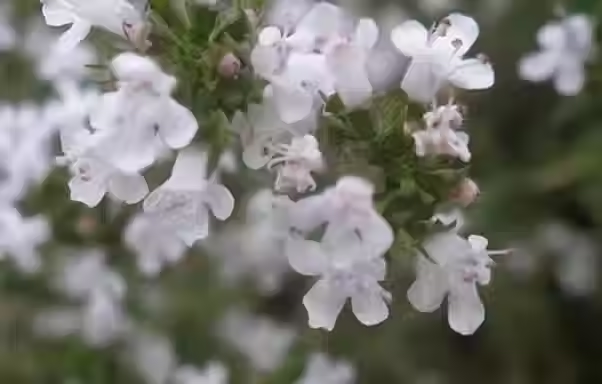
Thyme
(Thymus vulgaris L.)

Thyme has been known and used by the Greeks, Romans, and Egyptians since antiquity. Pliny and Dioscorides mentioned its properties. In ancient Greece, it was used for culinary, medicinal, and religious reasons, as it was burned as incense in temples and shrines due to its fragrance. The Egyptians used it to embalm their dead, and Roman soldiers bathed in it to boost their courage.
Cooking
Thyme has an intense, slightly spicy flavor, so it should be used sparingly. It pairs well with meat, poultry, fish, sauces, legumes, and cheese. It is an herb that should be added at the beginning of cooking to allow time for its aroma to develop, and it is also excellent for marinades. It can be combined with sage and rosemary, especially with baked and grilled meats.
Traditional Properties
Thyme is traditionally used as a tea to relieve coughs, colds, and gastrointestinal problems. Due to its antiseptic, antifungal, and antispasmodic properties, it can be used as a gargle for tonsillitis, laryngitis, and other throat ailments. It is also believed to strengthen and invigorate the mind.